

Travel News
DOT Makes New Plans for Bad Weather Travel
Image Credit: Bigstock







To avoid excessive delays this winter, air travel experts are researching ways to distribute information about diverting planes in bad weather.
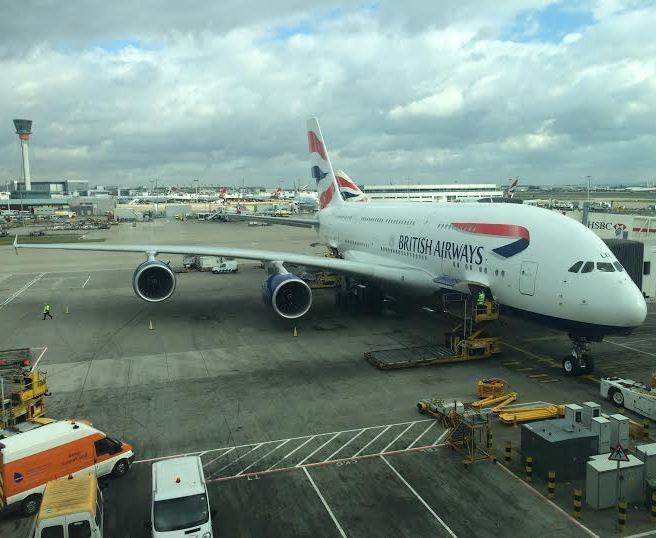
At the end of last month, 250 federal officials and industry representatives gathered to discuss plans for air travel in severe weather conditions. This forum comes in response to the fiasco in October in Hartford, Connecticut, during which a New York City-area snowstorm forced 28 planes to land at Bradley International Airport, where some of the planes were then stranded on the tarmac for more than seven hours.
Bradley is not considered to be one of the worst weather airports in the country, according to a report by weather.com, but the New York City area airports are ranked third. The snowstorm that impacted JFK, La Guardia, and Newark airports contributed to the chaos in Hartford.
James Redeker, Connecticut’s transportation commissioner, believes much can be learned from what happened in Hartford. He recommended to Secretary of Transportation Ray LaHood that an increase in information sharing would be helpful in such situations.
Federal Aviation Administration Deputy Administrator Michael Huerta agrees that communication is key. He outlined five proposals for consideration:
-Constructing a central website, possibly through the Federal Administration Association’s (FAA) site, with information relevant to weather-related diversions, such as an airport’s capabilities for refueling, de-icing, and Customs service.
-Holding strategic-planning teleconferences designed to keep airports aware of diverted planes.
-Better identifying diverted flights so air traffic controllers and airports know which planes are unexpected.
-Coordinating equipment maintenance at airports.
-Creating contingency plans for airports and airlines that establish fines for unreasonable delays.
Joe Bertapelle, director of systems operations for JetBlue, which had one of the stranded planes on October 29, insists that airports need to converse with airlines about availability and location of refueling and de-icing equipment.
 In an effort to improve communication, Randy Babbitt, former head of the FAA said that the agency will now include airports in command-center conference calls regarding gate visibility, snow removal and de-icing equipment. Babbitt is also seeking to establish a hotline for airports to check the status of weather diversions.
The air travel industry should see changes soon. According to an FAA representative, the agency is “working closely with airports, airlines and other members of the aviation community to refine the recommendations and develop an implementation plan. We expect to be able to implement some aspects of the plan in the short term.”
Aviation consultant Mike Boyd notes that preparing for weather contingencies is a good idea, but a situation like the delays in Hartford will likely happen again.
Realistically, its important to manage expectations. “It will happen again,” says Boyd, “but you have a better chance of winning the lottery than getting stuck on the tarmac for hours.”
Will you be traveling this winter? How are you planning ahead for winter weather issues?
For more information, check out:
- Peter’s CBS News report on Avoiding Travel Disasters
- Peter’s CBS News report on the 7-Hour Tarmac Delay
- our news coverage of the incident at Bradley Airport, “Did Jet Blue and AA violate the DOT’s Bill of Rights?”
- The Top 10 Worst Weather Airports in America
By Corinne DeWitt for PeterGreenberg.com
Feature Image credit: Bigstock
Related Links: USA Today, Weather.com