

Worldwide Pandemic Diaries
Worldwide Pandemic Diaries – Croatia


As part of our continuing series of “Pandemic Diaries”, we publish situation reports from our colleagues and correspondents all over the world. In this latest diary, we hear from Nebojša Taraba, a film/TV producer and journalist in Croatia.
Although only two and a half months have passed since the first case of coronavirus infection in Croatia, it now feels like a century ago.
On that February 25, I was at the Berlinale (Berlin International Film Festival), the atmosphere was tense, fellow Italian producers were anxiously receiving news from their homeland, most of them decided to end their stay in Berlin, and the next day colleagues from the BBC were invited to return home in a hurry, and I boarded a plane for Zagreb a few days later on February 28. Despite news of the virus in Italy, and Europe becoming more frequent and longer over those few days, Berlin was, as always, relaxed, full of life, and almost everywhere, not even a lot of masked people could be seen at the airport, only a few travelers from Asia, but in their case we considered it common… and Zagreb greeted me as I had left it a week earlier, but not for long.
At the beginning of March, news of the epidemic from neighboring Italy began to catch up with each other, and with each new report on the number of new cases and deaths, anxiety and uncertainty grew in Zagreb as well. Authorities called for caution, but no concrete measures had been taken yet. The borders were still open, but Croatian citizens were urged not to travel to Italy and Austria without much necessity, and those citizens who were in those countries were advised to return to Croatia. At the moment when it became clear that quarantine measures would be established (we are talking about March 13), a rush to the shops followed. People began to frantically buy food supplies, there were short-term shortages of flour, yeast, hygiene supplies and, of course, toilet paper. Fortunately, people soon realized that there was no fear of shortages and supply returned to normal very quickly. In order to prevent profiteering in a crisis situation, the government prevented raising the prices of key food items, medicines and hygiene and protective equipment, and issued a decree that they must keep them at the levels they were on January 31 this year. The move significantly calmed people down.
Finally, sometime on March 18 or 19, epidemic protection measures were introduced. The number of new cases was already at 50-60 a day, and life as we knew it until then was completely halted: cafes and restaurants were closed, as well as all shops except those with food and pharmacies. Public gatherings, concerts and exhibitions were banned, cinemas and theaters were closed. Sporting events, weddings and funerals were stopped. Same with services in religious facilities. However, it was not a total lockdown. We could go for a walk, do some shopping, walk the dog, even go to the office, if not for a specific task, then at least for mental health. Fortunately, Croatian citizens took the situation seriously from the very beginning and adhered to the measures prescribed by the crisis management team that addressed the public twice a day in the first ten days, and then once a day, at 2 pm, when the public was informed about the number of newly infected and deaths from coronavirus, and updating about new measures.
The first month was difficult – there was only one topic in the public space – Covid19. The number of infected people was increasing day by day, people were afraid, they were looking for answers. The situation in Italy, and then in Spain and France, offered neither consolation nor hope. Movement or commuting was allowed strictly within the municipality of an individual’s residence, public transport was stopped and traffic between counties was banned. The borders were tightly closed, and all those returning to Croatia from abroad had to undergo mandatory self-isolation for 14 days. And then the number of newly infected people stabilized, and then slowly began to fall. A month and a half after the introduction of strict measures, gradual concessions began. As of April 27, the operation of open-air markets has been allowed again, other shops in addition to those with food have been opened, libraries, small crafts shops, etc.
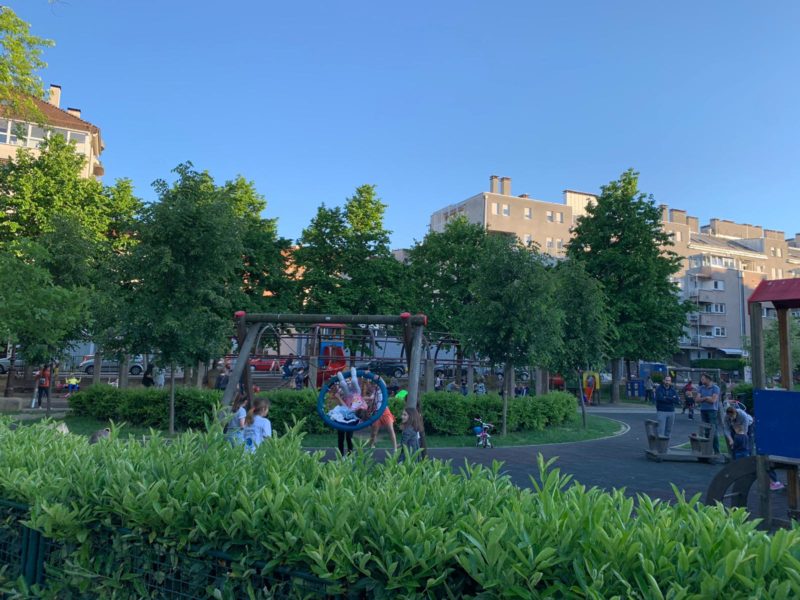
From May 4, the measures were further relaxed. The operation of hospitals and public services and institutions was normalized, gatherings of up to 10 people in public places were allowed again. Also, the hairdressers’ salons have reopened, as well as mani-pedis, massage salons, etc. And from May 11, elementary schools – kindergarten through 4th grade – will start working, children’s playgrounds will reopen and free trade will also be established throughout the country, which has so far required special permits issued by the crisis headquarters. From next week, which makes us especially happy, cafes and restaurants are opening, although they are only allowed to serve customers on the terraces and not in the closed spaces, but we will not complain too much. We expect that at the beginning of June we could start cultural events and open-air concerts, as well as the resumption of film and television productions, which makes me happiest at the moment. Of course, all this with clearly prescribed measures – hygienic and protective. Finally, it is expected that from June 1, both international traffic and the tourist season could be normalized, and that two-week self-isolation would no longer be mandatory for guests from countries with a good epidemiological situation.
At this point, we are, without a doubt, one of the safest places in Europe and the world, and IF the eventual second wave is to come, we will be even more prepared.
Finally, in this country, specifically in Dubrovnik, in the summer of 1377, the first quarantine in the world was established, in the sense in which it is practiced today, so we Croats couldn’t allow ourselves to fail this test.
And as for me, I couldn’t be happier that the northwestern part of Croatia – ISTRIA – where my family and I usually spend the beginnings of summer, has been “Covid-19 free” for days now. That is my next destination.