





Worldwide Pandemic Diaries: Reports from our correspondents across the U.S. and around the world. This week: Our report from Elaine Sciolino.
My former Newsweek colleague Eliane Sciolino writes for The New York Times from Paris, where she has lived with her husband since 2002. Her most recent book is The Seine: The River That Made Paris. Here’s her report from the shutdown in Paris.
The end of the “flâneur” — the stroller with no fixed destination — except on the rue des Martyrs!
Paris is the city that celebrates cafe life. These days, all the cafes, restaurants, parks, churches, restaurants, and non-essential stores are closed. Bicycling; jogging between 10 in the morning and seven in the evening; and strolling with someone you don’t live with are banned.
When I go out, I must carry a signed, timed “attestation de déplacement dérogatoire” (a certificate of exceptional movement) with my place and date of birth and the reason why Ï am on the street (necessary shopping, medical visit, essential work, for example). I can stay out for only an hour and not move farther than a kilometer away from home. 160,000 police officers have been deployed throughout the country to check that people have their “attestations” — and have them properly filled out — and if not, giving them fines.
Before my book on the Seine River, I wrote a book on The Only Street in Paris, the rue des Martyrs. With President Macron’s extension of the lockdown in France at least until May 11, my street has become more important than ever. Because of a zoning law that protects food “artisans,” the bottom of the street is mostly dedicated to small food stores. They are open for business. On two blocks I have my butcher, fishmonger, cheese stores (2), liquor store, Italian epicerie, greengrocers (5 – two organic), bakeries (4 depending on the day) and a supermarket.
The shopkeepers are tough; they were open for business the day after the November 2015 terrorist attacks that tore through Paris and they are open today. (The length of the rue des Martyrs is one kilometer so it’s a perfect stroll for the “flaneur.”) There were six police officers checking papers when I was out yesterday.
In my 1837 building, more than half the people who live here fled to the countryside. A French and English tutor who stayed behind leads four women (including me and the Portuguese-born concierge) in 75 minutes of aerobic exercises in the cobblestoned courtyard every afternoon at six. Because there is much less traffic and pollution, the birds are taking over and we can hear them chirping through our windows. (Ducks were parading in front of the Comedie Francaise the other day). Inside the apartment, we have a large mouse that refuses to die.
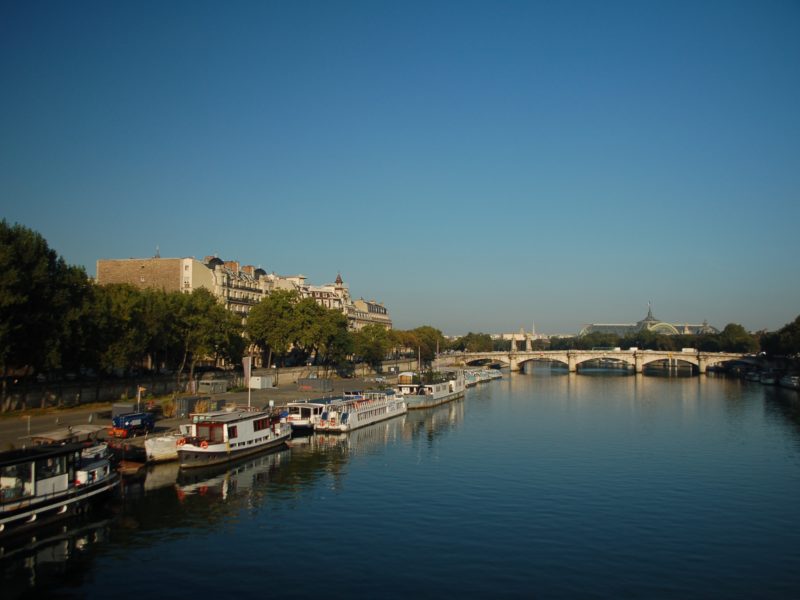
And the Seine? Without boat traffic and riverside businesses the river is so clean in Paris you can see straight to the bottom.
MORE PANDEMIC DIARIES: